
The Hawkins Perinatal Sleep & Health Behavior Lab

The Hawkins Perinatal Sleep & Health Behavior Lab

  • Current Projects
  • Past Projects
  • Publications
  • News
  • About Us
  • Opportunities

Advancing sleep
and health research

In pregnancy and post-partum

Current Initiatives
About Us

Sleep is an important, yet understudied aspect of postpartum health.

The Hawkins Perinatal Sleep Health and Behavior Lab aims to advance the science of maternal health by promoting physical and mental well-being during and after pregnancy.

Our goal is to ensure that no mother suffers in the birthing process, and that every family can thrive across generations.

  • Sleep Research Day Community Engagement Event 2025
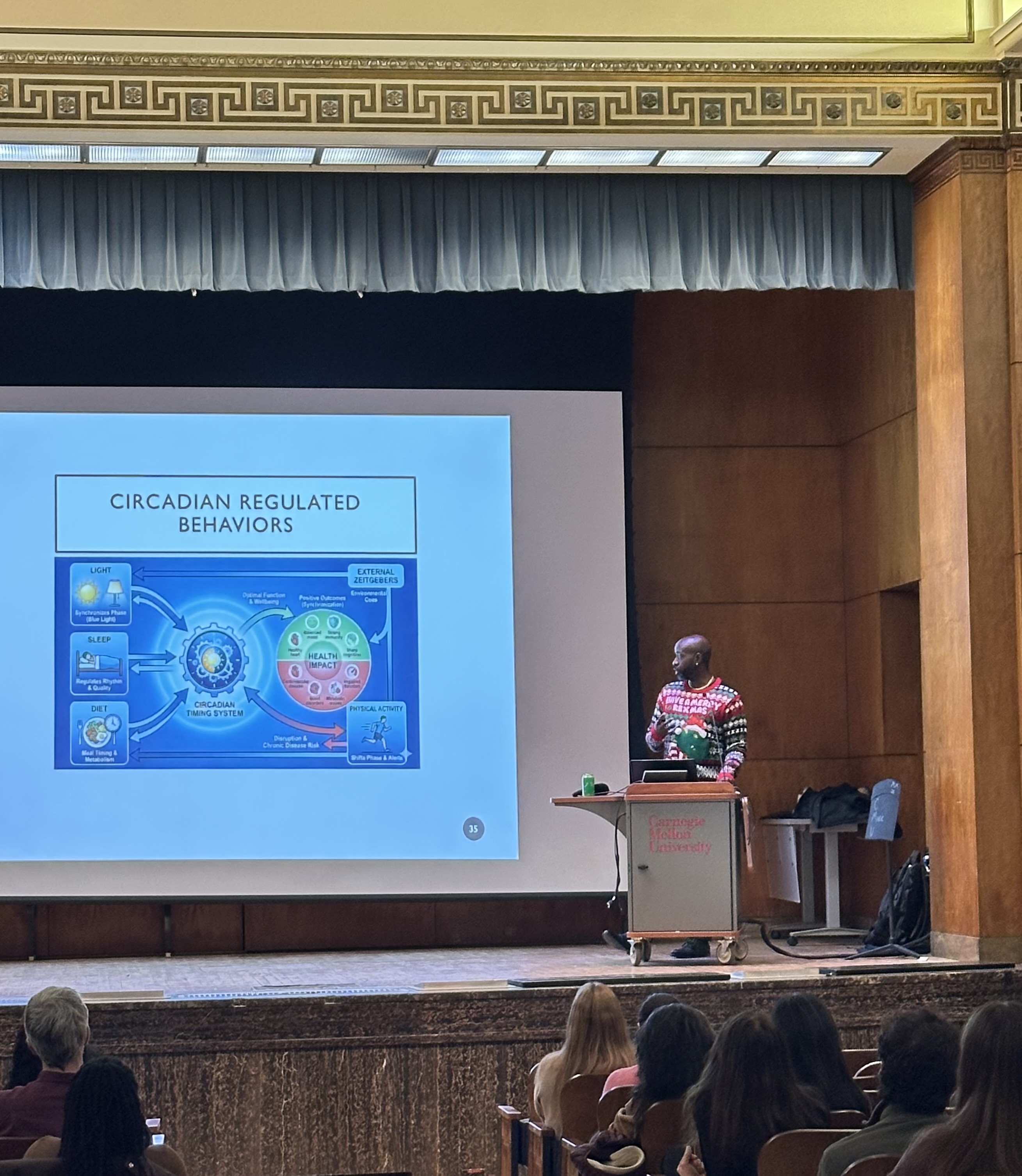
  • Mind Body Institute 2024
  • Sleep Research Day Community Engagement Panel 2025
  • The Great Debate Panel at SBSM 2026 in Chicago
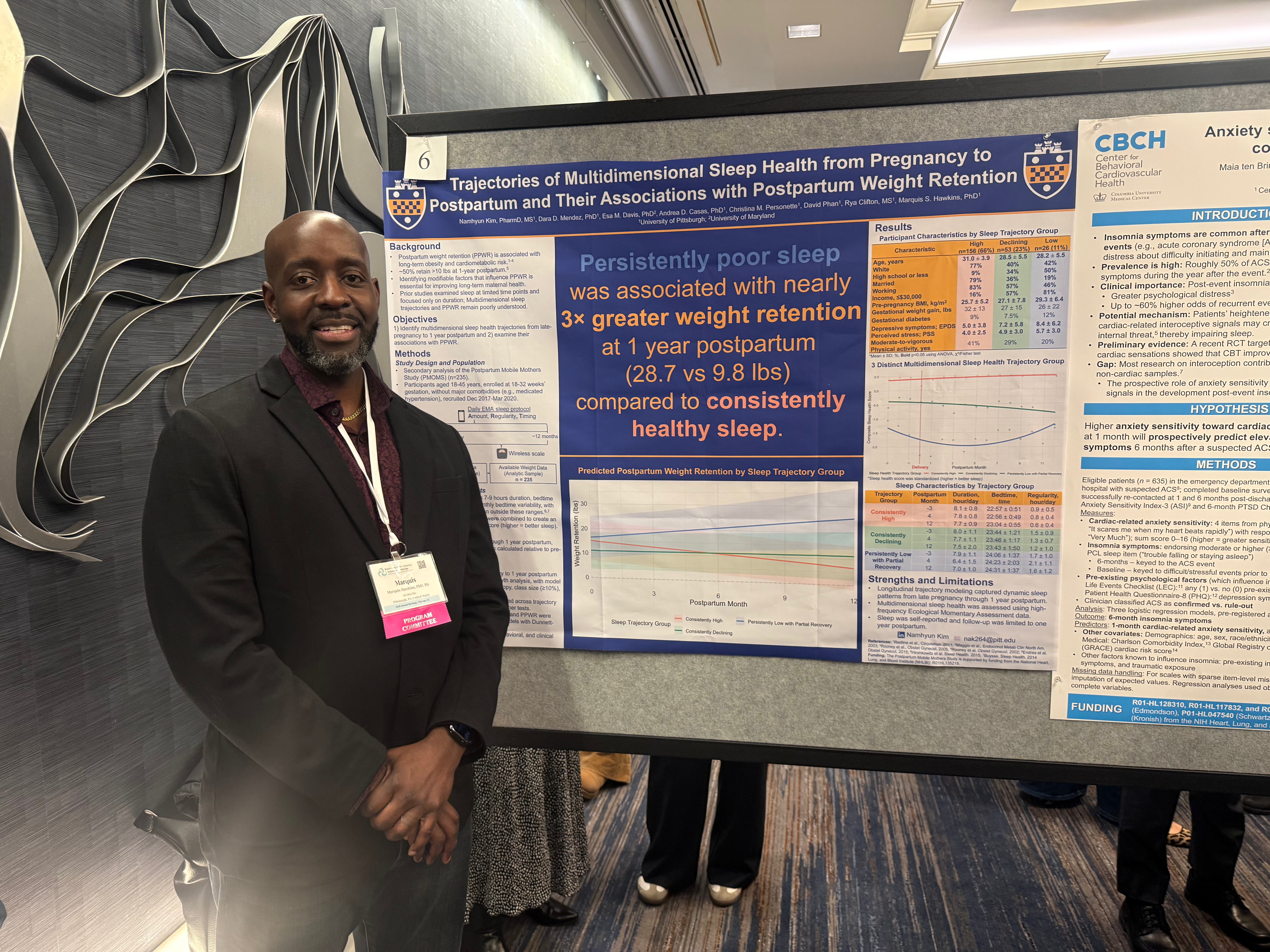
  • Poster Presentation at SBSM 2026

Our mission is to improve maternal health by advancing our
understanding of the importance of sleep and sleep-related behaviors.
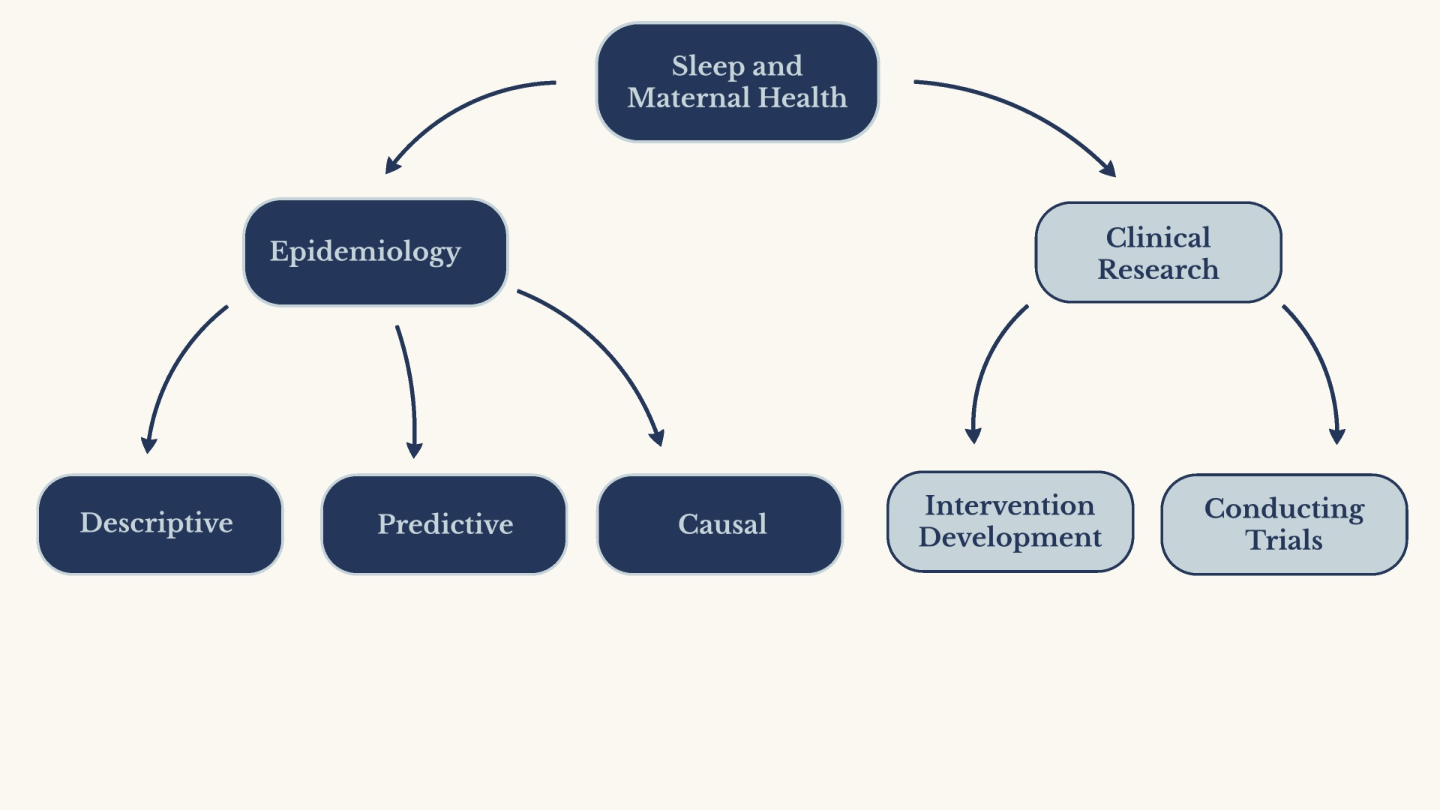
Here are the methods we use. Click on any block to learn more:

Sleep Epi Clin Desc Predictive Causal Int Trials

Sleep and Maternal Health

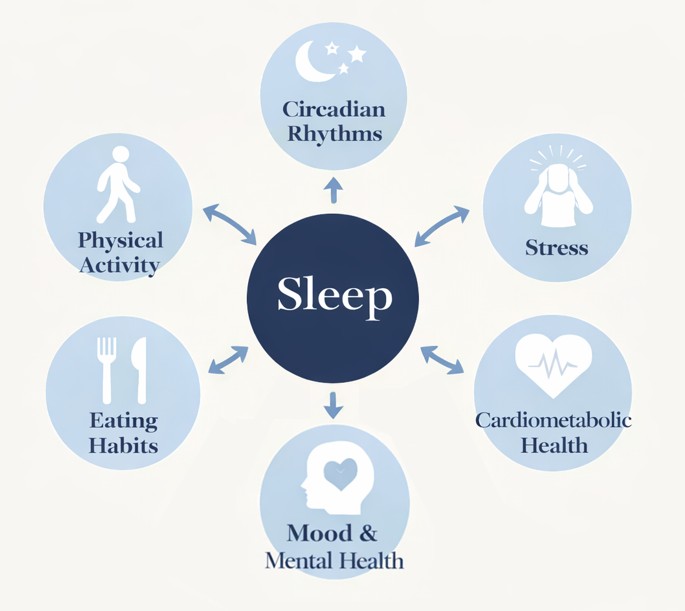
Pregnancy and the months after birth can completely reshape sleep-timing, quality, and how “rested” someone feels. It affects mood, appetite, energy, metabolism, and how the body handles stress. During pregnancy and postpartum, those pieces are already changing fast, so sleep can act like a “multiplier” for health-helping or hurting behaviors.

In our lab, we look at sleep alongside other everyday behaviors that work together: physical activity, eating patterns, and daily routines. We’re especially interested in how sleep and circadian rhythms connect to cardiovascular risk, weight changes, and overall well-being during the perinatal period.

Epidemiology

Our lab uses two primary research methods: epidemiology and clinical research. Epidemiology focuses on observing patterns at the population level, while clinical research involves interacting with individuals through structured studies and interventions.

In our lab, we examine sleep patterns, circadian behaviors, and related social, behavioral, and environmental factors to understand how sleep affects specific groups of people across pregnancy and the postpartum period.

By analyzing these population-level data, we aim to identify how different dimensions of sleep may affect groups differently. A classic way to frame epidemiologic thinking is time, place, and person: When is the issue occurring? Where is it most prominent? Who is most affected?

These insights help us guide what we measure next and inform which interventions are most promising to develop and test in clinical research.


Clinical Research

Clinical research is where epidemiologic observations meet the real world. It includes studies designed to measure health behaviors and outcomes in real people, often over time, using structured protocols and validated tools.

In our lab, clinical research often focuses on pragmatic, real-world approaches such as internet-assisted programs, wearable or home-based monitoring, and lifestyle interventions that fit into daily life during pregnancy and postpartum.

This work helps us understand not only whether something works, but how it functions in realistic settings and how well it fits into people’s daily lives.

See an Example

Descriptive

What is healthy sleep?

Descriptive methods are how we characterize sleep during pregnancy and the postpartum period. Rather than relying on a single measure, we use a multidimensional framework that captures multiple aspects of sleep (duration, timing, quality, regularity, and fragmentation), because no single metric tells the whole story.

This approach is especially important in perinatal health, where “healthy sleep” does not look the same as it does for non-pregnant populations. By describing how sleep patterns change during and after pregnancy, we establish a baseline for understanding what is typical, what is variable, and what may warrant further attention.

Predictive

What might happen?

Predictive methods focus on identifying risk. Using data from earlier points in time, we ask whether patterns in sleep and related behaviors can help identify individuals who may experience less optimal health outcomes later on.

Unlike descriptive work, which is more sleep-focused, predictive analyses are more person-focused. The goal is to determine who may benefit most from additional support, and which types of interventions are most likely to be effective for different individuals. This work helps inform more targeted strategies for designing clinical trials.

Causal

If we change the present, can we change the future?

Causal methods aim to determine whether changes in sleep or related behaviors would actually lead to changes in health outcomes. To do this, our lab uses trial emulation, an approach that uses existing data to ask “what if” questions about health interventions by approximating how a randomized trial would have been conducted if it were geared towards our research question.

By defining comparison groups, variables, and outcomes, trial emulation allows us to “reverse-engineer” real-world data to ask whether certain interventions might help specific populations. This approach strengthens causal inference when traditional trials are not feasible and helps identify which strategies are most promising to test in future intervention studies.

See the OPTIMIZE Trial

Intervention Development

In the intervention development stage, we take what we learn from both epidemiologic research (on the left) and existing clinical research and translate it into a structured program designed to support the health of pregnant and postpartum individuals. Often times, this also means adapting existing health interventions specifically for pregnant and postpartum individuals.

In our lab, we draw on research related to:

  • Sleep
  • Behavioral science
  • Sociological context
  • Participant feedback

and more to shape intervention content, delivery, and goals. The focus is on creating interventions that are evidence-informed and responsive to people’s daily realities.

Conducting Trials

Conducting trials is when interventions are tested with participants. By recruiting participants through community outreach and research registries like Pitt+Me, we deploy interventions to evaluate how they function in real-world settings.

In these studies, we assess whether an intervention is feasible (can people realistically participate?), acceptable (do participants find it useful and engaging?), and shows preliminary efficacy (does it appear to work as intended?). We use both quantitative data—such as participation percentages, numerical weight changes, and other health outcome measures—along with qualitative methods such as interviews, to understand participant experiences. When interventions are supported by sufficient evidence, they can inform future research and, ultimately, be translated into clinical or community-based care.

Our mission is to improve maternal health by advancing our understanding of the importance of sleep and sleep-related behaviors. Here are the methods we use:

Epidemiology

Our lab uses two primary research methods: epidemiology and clinical research. Epidemiology focuses on observing patterns at the population level, while clinical research involves interacting with individuals through structured studies and interventions.

In our lab, we examine sleep patterns, circadian behaviors, and related social, behavioral, and environmental factors to understand how sleep affects specific groups of people across pregnancy and the postpartum period.

By analyzing these population-level data, we aim to identify how different dimensions of sleep may affect groups differently. A classic way to frame epidemiologic thinking is time, place, and person: When is the issue occurring? Where is it most prominent? Who is most affected?

These insights help us guide what we measure next and inform which interventions are most promising to develop and test in clinical research.

Descriptive

What is healthy sleep?

Descriptive methods are how we characterize sleep during pregnancy and the postpartum period. Rather than relying on a single measure, we use a multidimensional framework that captures multiple aspects of sleep (duration, timing, quality, regularity, and fragmentation), because no single metric tells the whole story.

This approach is especially important in perinatal health, where “healthy sleep” does not look the same as it does for non-pregnant populations. By describing how sleep patterns change during and after pregnancy, we establish a baseline for understanding what is typical, what is variable, and what may warrant further attention.

Predictive

What might happen?

Predictive methods focus on identifying risk. Using data from earlier points in time, we ask whether patterns in sleep and related behaviors can help identify individuals who may experience less optimal health outcomes later on.

Unlike descriptive work, which is more sleep-focused, predictive analyses are more person-focused. The goal is to determine who may benefit most from additional support, and which types of interventions are most likely to be effective for different individuals. This work helps inform more targeted strategies for designing clinical trials.

Causal

ThIf we change the present, can we change the future?

Causal methods aim to determine whether changes in sleep or related behaviors would actually lead to changes in health outcomes. To do this, our lab uses trial emulation, an approach that uses existing data to ask “what if” questions about health interventions by approximating how a randomized trial would have been conducted if it were geared towards our research question.

By defining comparison groups, variables, and outcomes, trial emulation allows us to “reverse-engineer” real-world data to ask whether certain interventions might help specific populations. This approach strengthens causal inference when traditional trials are not feasible and helps identify which strategies are most promising to test in future intervention studies.

Clinical Research
Intervention Development

In the intervention development stage, we take what we learn from both epidemiologic research (on the left) and existing clinical research and translate it into a structured program designed to support the health of pregnant and postpartum individuals. Often times, this also means adapting existing health interventions specifically for pregnant and postpartum individuals.

In our lab, we draw on research related to:

  • Sleep
  • Behavioral science
  • Sociological context
  • Participant feedback

and more to shape intervention content, delivery, and goals. The focus is on creating interventions that are evidence-informed and responsive to people’s daily realities.

Conducting Trials

Conducting trials is when interventions are tested with participants. By recruiting participants through community outreach and research registries like Pitt+Me, we deploy interventions to evaluate how they function in real-world settings.

In these studies, we assess whether an intervention is feasible (can people realistically participate?), acceptable (do participants find it useful and engaging?), and shows preliminary efficacy (does it appear to work as intended?). We use both quantitative data—such as participation percentages, numerical weight changes, and other health outcome measures—along with qualitative methods such as interviews, to understand participant experiences. When interventions are supported by sufficient evidence, they can inform future research and, ultimately, be translated into clinical or community-based care.

Meet the Principal Investigator

Marquis Hawkins

Dr. Marquis S. Hawkins is an Assistant Professor in the Department of Psychology, Biological & Health Program at the University of Pittsburgh. He is a behavioral epidemiologist whose work focuses on improving maternal health during and after pregnancy. His research examines how sleep and sleep-related behaviors (e.g., diet and physical activity) interact to influence cardiovascular, metabolic, and mental health outcomes across the perinatal period.

His work is driven by a commitment to advancing evidence-based solutions to optimize health trajectories of mothers and their families across generations.  

View Publications

Publications

Learn More

Current Projects

Learn More

Opportunities

Learn More
The Hawkins Perinatal Sleep & Health Behavior Lab

The Hawkins Perinatal Sleep & Health Behavior Lab

Understanding Sleep in Pregnancy and Postpartum

  • Current Projects
  • Past Projects
  • Publications
  • News
  • About Us
  • Opportunities

Twenty Twenty-Six

Designed with WordPress


Loading Comments...